
Designing Commercial Fire Alarm Monitoring for Real-World Use
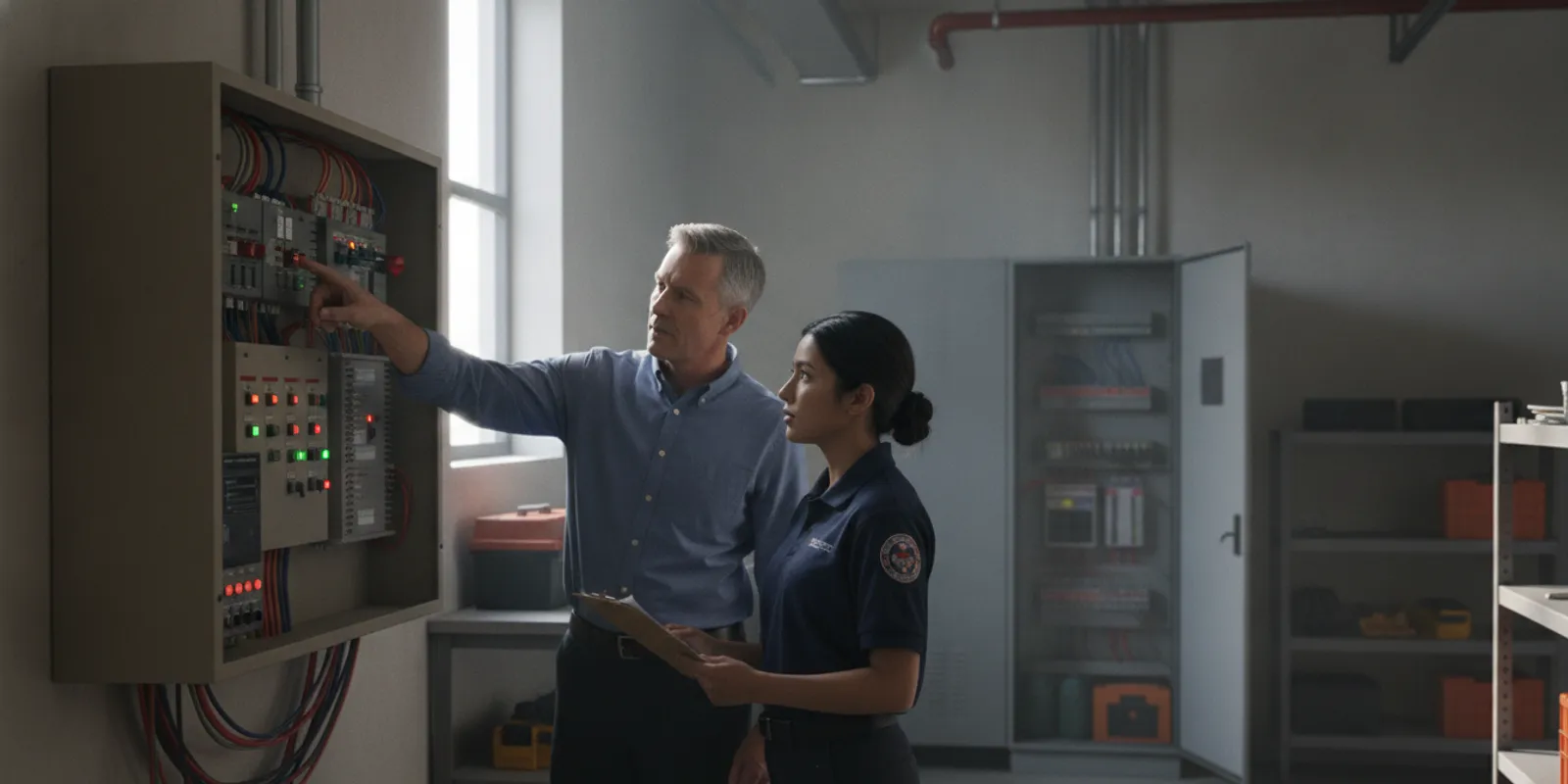
Commercial fire alarm monitoring is more than sending a signal after an alarm activates. A dependable plan connects compatible equipment, a reliable communication path, a clearly defined response, and people who know what to do next. Before comparing providers or approving an upgrade, facility leaders should map how the system will work during a normal day, an outage, a renovation, and an actual emergency.
Request a fire alarm system consultation
What should commercial fire alarm monitoring accomplish?
Monitoring is one part of a broader fire alarm arrangement. Devices at a property detect conditions and report signals through a control panel and communication path. A monitoring arrangement receives designated signals and follows the response procedure agreed upon for the site. The exact equipment, signals, reporting, and response depend on the building, system design, applicable requirements, and the parties responsible for the site.
The objective is not simply to make an alarm visible somewhere off site. The objective is to make the right signal reach the right destination and prompt an appropriate response. That requires clarity on what is monitored, how signals travel, what happens if communication fails, and who has authority to act. A facilities team can use the broader security systems service overview to understand how an alarm system may fit alongside other protection measures, while keeping fire alarm requirements distinct from other security functions.
Monitoring does not replace a properly designed and maintained fire alarm system, the building’s emergency procedures, or the responsibilities of the authority having jurisdiction. Nor does it guarantee that a signal will prevent damage or injury. Treat it as a link in a response chain, not as a substitute for prevention, evacuation planning, inspections, or staff training.
Which signals and areas should the plan cover?
Start with the building’s life-safety design and the questions that the responsible professionals and local authority require you to answer. The monitoring scope should correspond to the installed system and its approved configuration. Do not assume that every device, alarm condition, supervisory signal, or trouble condition is included simply because a site is described as monitored.
Prepare a site inventory before requesting proposals. Include the building’s use, occupancy patterns, floors or separate structures, control-panel location, existing devices, known additions, and any planned renovations. Note spaces that may be hard to reach or that have special operating schedules. This gives a qualified project team a concrete starting point for checking the system boundary and identifying information that needs to be verified on site.
- Identify the system boundary. List the building areas and structures served, along with excluded or separately protected spaces.
- Clarify signal types. Ask which alarm, supervisory, and trouble conditions are transmitted and how each is identified to the receiving party.
- Confirm contact and response information. Document who should be contacted, in what order, and how the procedure changes after hours. Follow local requirements for emergency notification.
- Record system changes. Track additions, panel replacements, tenant changes, and renovations that could affect device coverage or signal handling.
For multi-building operations or larger facilities, avoid treating the site as a single undifferentiated zone. A clear building-by-building inventory makes it easier to understand what an event refers to and which team needs to respond. In industrial environments, an assessment can also consider how the fire alarm arrangement sits beside the broader industrial security system plan, without conflating fire protection with surveillance or access control.
How do monitoring communication paths differ?
Monitoring depends on a communication path between the property and the receiving point. The available choices are not interchangeable in every installation. Compatibility with the existing panel, local rules, network conditions, and the provider’s capabilities all matter. Ask the project team to identify the proposed path in plain language and explain what happens if it is interrupted.
| Planning consideration | What to ask | Why it matters |
|---|---|---|
| Primary communication path | What equipment and network carry signals from the panel? | Confirms how a normal event reaches the intended receiver and what dependencies are involved. |
| Backup or alternate path | Is an alternate path part of the design, and how is a failure reported? | Clarifies the response to loss of the primary connection instead of assuming continuity. |
| Signal identification | Can the receiving party identify the site and the signal type clearly? | Helps responders and facility staff follow the correct procedure. |
| Power and equipment dependencies | What components need power, network access, or routine service? | Exposes dependencies to include in testing, maintenance, and change planning. |
| System changes | Who updates the account and tests the path after equipment or contact changes? | Prevents a documented plan from drifting away from the installed system. |
These questions are a comparison framework, not a recommendation for one technology. A proposal should explain the specific design for the site rather than using a general label such as “redundant” without describing what is backed up and how a failure is surfaced. If the existing equipment is older or has been modified over time, ask for an assessment of compatibility before selecting a monitoring arrangement.
Consider a two-building business with a shared facilities team. A proposal that says only “remote monitoring included” leaves practical questions open: does each panel report with a distinct building identifier, are trouble signals included, and which contact receives a notification when the primary path is unavailable? Ask the provider to walk through those scenarios against the actual site inventory. The goal is not to add complexity for its own sake; it is to expose assumptions before they become operational surprises.
What should happen after a signal arrives?
A monitoring plan is only useful when the response steps are understood. Establish how the receiving party handles each signal category, what information is available to them, and when the site’s designated contacts are involved. The response process must align with applicable rules and emergency procedures. Do not rely on an informal assumption that a monitoring operator will know the building’s current staffing, hazards, or evacuation plan.
Assign named roles rather than relying on a vague instruction to “call management.” Identify a primary and backup site contact, keep their details current, and establish who can authorize access or coordinate follow-up. Make sure the staff who handle alarms understand the difference between an active alarm and a trouble condition, and know the site’s approved next steps. Any emergency response should follow local emergency procedures; monitoring is not a reason to delay evacuation or other required action.
Make the response instructions usable during a busy shift. For example, a property manager might own contact updates, while a facilities lead coordinates authorized system tests and a designated alternate covers absences. Put the escalation sequence in the location or record system staff are expected to use. Review it after personnel changes, changes in operating hours, or a tenant turnover. If a contact cannot be reached, the written procedure should make the next step clear without asking staff to improvise.
For businesses planning a wider protection program, the commercial security services page provides context for coordinating security needs across a property. Keep the fire alarm response protocol clearly defined even when the same facilities team manages cameras, intrusion alarms, or doors.
How should a facility prepare for installation or a change?
Even a monitoring upgrade can involve more than selecting a service. Changes to a panel, communication equipment, wiring, power, or connected devices may require design review and coordination. The project team should determine what is appropriate for the particular system and jurisdiction. Schedule work around building operations, communicate any approved temporary arrangements to affected staff, and make sure required safeguards are addressed before work begins.
- Gather records. Collect available drawings, equipment details, inspection or service records, current contact instructions, and documentation of prior changes.
- Walk the site. Review the control equipment, communication dependencies, building layout, operating hours, and areas where access or work may need coordination.
- Define the scope. Separate what will remain, what may be changed, and what needs professional or authority review. Note any unknowns instead of treating them as confirmed.
- Coordinate stakeholders. Identify the property owner or manager, operations staff, the fire alarm professional, the monitoring provider, and any other party with an approval or response role.
- Test and document. Agree how the completed work and signal path will be tested, who will participate, how test notifications are coordinated, and what records will be handed over.
Approval and design rules depend on jurisdiction and project scope. As one jurisdiction-specific example, New York City’s fire alarm application guidance says a New York State registered design professional must approve fire alarm plans. That example is not a statement of Chicago-area requirements; confirm applicable requirements with the authority having jurisdiction and the qualified professionals for the project. Review the NYC fire alarm application guidance for that city’s process.
Where the work involves a commercial property, a site review should account for how operations and building access affect the project. InVision Systems describes a consultation, custom design, professional installation, and training-and-support process in its company information. A facility manager can start by sharing the building context through the consultation contact page. For related camera planning—not a replacement for fire alarm design—see the guide to comparing commercial security cameras.
Build a handoff into the scope rather than leaving it for the end. Ask who will receive updated drawings or system records, who will confirm that contacts and identifiers are correct, and who is responsible for communicating changes to building staff. A short operational walkthrough can use realistic examples: what staff should expect during an authorized test, where to report a trouble indication, and which person owns a contact-list correction. Record open items with an owner and due date so that they do not disappear once equipment work is complete.
What ongoing checks keep the plan useful?
A monitoring arrangement should be reviewed when the property, people, or system changes. A new tenant, altered contact list, panel or network replacement, construction project, or change in building use can make old instructions inaccurate. Set an owner for updating records, and establish a review routine consistent with the applicable requirements and service arrangements.
- Keep the site name, address, system identifiers, and contact sequence accurate.
- Confirm who is responsible for coordinating tests and notifying relevant parties before an authorized test.
- Retain records of changes, service visits, tests, unresolved issues, and handoff instructions.
- Review whether construction, new spaces, or altered operations affect the documented system boundary.
- Make sure new staff with response duties receive the current procedures and know where to find them.
Monitoring and maintenance are related but not identical. A received signal does not establish that every field device is in good condition, and a maintenance visit does not by itself confirm every response contact is current. Keep the respective responsibilities visible in the service documents. For a broader property-level review, use the areas served page to check whether a consultation is available for your location, and review the burglar alarm service information separately if you are coordinating intrusion protection alongside fire protection.
A practical review can follow a simple change log. When a tenant takes over a suite, record the date, the affected area, the contact updates requested, and who confirms that the account information was changed. When a network or panel is replaced, note which party verifies communication after the work. This makes the monitoring plan easier to audit and helps a future facilities manager understand why a configuration or contact sequence exists.
How should you compare proposals?
Compare scope and operational clarity before focusing on a single line item. A proposal should describe the current conditions it assumes, the equipment or service being proposed, any dependencies, the test and handoff plan, and what is outside its scope. If details are unknown, ask how they will be verified and whether they could change the work. Cost comparisons are meaningful only when the proposals cover comparable responsibilities and deliverables.
- Does the proposal identify the site, system boundary, and signals covered?
- Does it explain the primary communication path and the handling of a communication or power problem?
- Are account setup, contact updates, tests, and coordination responsibilities assigned to specific parties?
- Does it distinguish fire alarm functions from other security services?
- Does it state what installation, configuration, documentation, training, and follow-up are included?
- Are assumptions, exclusions, existing-system limitations, and items requiring approval stated plainly?
- Can the team explain how work will be coordinated with facility operations and applicable authorities?
Look for concrete answers instead of broad assurances. Ask the provider to walk through a normal alarm, a trouble signal, a lost communication path, and a change in the contact list. A useful response explains who does what, what is recorded, and what the facility must maintain. If you are also considering cameras or broader site protection, keep those decisions in separate scope sections so that fire alarm monitoring is evaluated on its own responsibilities.
For a fair side-by-side review, use the same scenarios with every bidder. Write down what each proposal includes for signal coverage, communication dependencies, authorized tests, documentation, contact maintenance, and staff handoff. Mark each item “included,” “excluded,” or “needs confirmation,” rather than inferring coverage from a product name. Then ask about differences that affect day-to-day responsibility. One proposal may include a clearly described test coordination process while another leaves it to the property team; the relevant question is who will own the task, not which description sounds more impressive.
A useful consultation packet can be short. Include the site address and use, available panel information, a basic floor or building list, operating schedule, known system changes, and current response contacts. Label uncertain details as unknown. This prevents an early conversation from turning guesses into assumed facts and helps the project team identify what to inspect next. The packet should also note planned renovations or occupancy changes, since a design that fits current operations may need review if the building use is about to change.
Schedule a site consultation for your fire alarm needs
Frequently asked questions
Does monitoring replace the fire alarm system?
No. Monitoring is a communication and response component, not a replacement for a properly designed, installed, maintained, and approved fire alarm system or the property’s emergency procedures. Confirm what the monitoring scope includes and what remains the facility’s responsibility.
Does a monitored system guarantee emergency services will be dispatched?
No monitoring description should be treated as a guarantee. The outcome depends on the signal, the configured procedure, applicable requirements, and the circumstances. Ask the responsible provider to explain exactly how each signal is handled, and follow the site’s emergency procedures.
Can an existing fire alarm panel be connected to monitoring?
Possibly, but compatibility and suitability depend on the specific panel, its condition, communication equipment, system configuration, and applicable requirements. Have the existing system assessed before assuming that a connection or upgrade is straightforward.
What should a business have ready for a consultation?
Gather the building address and use, available system records, known equipment details, operating hours, current response contacts, and information about planned renovations or recent changes. A site walk can clarify missing details and help define what needs further review.
Plan around your actual site
Commercial fire alarm monitoring works best when the system boundary, signal path, response roles, and change process are documented for the actual property. Use those details to compare proposals, confirm local requirements with the appropriate authorities and professionals, and keep the plan current as the building changes.