
Your Apartment Building Phone Entry System Guide
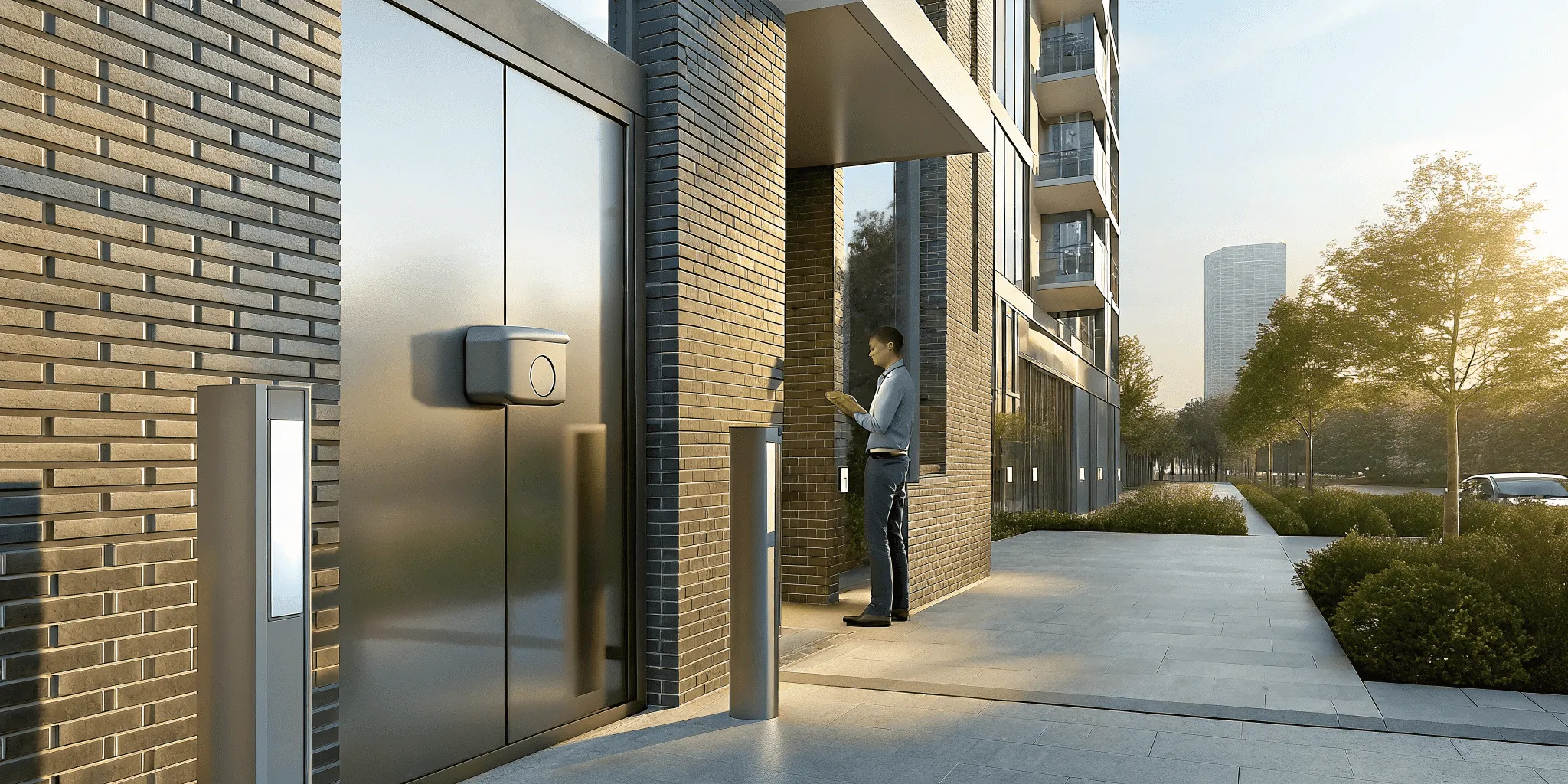
For a property manager, the front entrance is where resident convenience and building security meet. Older intercoms and analog call boxes can be difficult to update, while a cloud-based system gives building owners a more practical way to manage access as residents, tenants, and daily needs change.
An apartment building phone entry system connects a building directory with residents’ phones, allowing authorized guests to reach the right tenant and residents to grant entry remotely. Cloud-based management can also support remote updates, guest access controls, and integration with other security systems.
For Chicago-area properties, the right solution should be designed around the building’s entry points, resident experience, and exposure to winter weather. Understanding how these systems connect visitors and residents is the first step toward choosing a reliable setup.
What Is an Apartment Building Phone Entry System?
An apartment building phone entry system is a visitor communication and door-release solution installed at a building’s main entrance. Instead of relying on a traditional key, buzzer panel, or staffed desk, a visitor selects a resident from a touchscreen directory and starts a call. The resident can answer from a cell phone, landline, or VoIP phone, even when they are away from the property.
How the visitor call works
At the entrance, a visitor uses a 10-inch, weathertight color touchscreen to search the directory. The display can be programmed for thousands of residents through a web browser, which gives property managers a practical way to maintain a large or frequently changing directory. Once the visitor selects a resident, the system places a call to the resident’s programmed number.
- The resident answers the inbound call from the phone entry panel and speaks with the visitor.
- After confirming the visitor’s identity, the resident presses a designated digit on the phone keypad.
- The system releases the door lock and plays a confirmation tone signaling successful entry.
Princeton University’s telephone-entry instructions describe the same basic process: residents press a specific key after answering, and the system provides a tone confirming that the door has opened. See the Princeton telephone-entry instructions for an example of this call-and-release process.
Cloud-based IP technology replaces dedicated analog lines
Modern systems use an internet connection and Voice over Internet Protocol, or VoIP, rather than requiring a separate analog phone line for the entry panel. This IP-based design supports centralized administration and makes it easier to update resident information without sending a technician to reprogram the entrance hardware for every change.
For building owners and property managers, the result is a more scalable system that can support multiple entrances, larger resident populations, and changing occupancy. A web-based directory also helps staff keep contact information current as residents move in or out.
Resident privacy remains part of the design
A visitor does not need to see a resident’s actual telephone number. Directory codes can route the call while keeping the underlying number private. Princeton’s guidance specifically notes that a directory code is not the resident’s phone number; it is a code used to keep that number secret. The resident can therefore communicate with a guest and control entry without exposing personal contact information.
InVision Systems designs and installs these phone entry systems for apartment buildings and other multi-tenant properties throughout the Chicago area. The right configuration depends on the building’s entrances, resident count, network environment, and access-control needs, so a site-specific design is more useful than a one-size-fits-all panel.
Key Benefits of Cloud-Based Phone Entry for Property Managers
For a property manager, the value of a modern phone entry platform is not limited to the call placed when a visitor arrives. Cloud-based management turns the entry directory into an active property-management tool. Instead of depending on an aging analog intercom and a service visit for every change. Managers can maintain resident information, respond to access needs, and keep the system aligned with the building as occupancy changes.
Update the directory without an onsite visit
Resident names, unit assignments, and directory codes change regularly. With a cloud-based system, an authorized manager can update the directory through a web browser on a laptop or smartphone. That means a move-in can be added, a move-out can be removed. And a resident’s contact information can be corrected without taking the entry station offline or waiting for a technician to reprogram hardware.
This remote-management model is consistent with how cloud-based multi-tenant access platforms are designed to operate. Building managers can maintain resident directories without manually updating the equipment onsite, a benefit documented in Princeton University’s telephone entry guidance about directory management and resident access.
Manage after-hours and emergency access remotely
Access issues rarely follow business hours. A resident may lock themselves out late at night, a new tenant may arrive after the office closes. Or an emergency may require a trusted person to enter the building. A cloud-connected apartment building phone entry system lets authorized property staff manage these situations from a phone or computer rather than driving to the property simply to change a directory record or coordinate entry.
Remote management does not remove the need for thoughtful access policies. Managers should define who can make changes, when temporary access is appropriate, and how changes are documented. Those controls help preserve convenience without turning emergency access into an informal process.
Keep the platform current as the property evolves
Older analog systems can become difficult to support as components age, phone infrastructure changes, and replacement parts become harder to source. A cloud-based platform is maintained through software updates, so the system can remain current instead of becoming obsolete as the building’s needs change. It also avoids requiring software to be installed on a property manager’s office computer, which simplifies access for teams working across multiple buildings.
Cloud-based vs. traditional phone entry: a comparison
| Feature | Cloud-based phone entry | Traditional analog intercom |
|---|---|---|
| Directory updates | Web browser, remote, no downtime | Onsite technician or hardware reprogramming |
| Phone line required | VoIP over existing internet | Dedicated analog phone line per panel |
| Resident capacity | Thousands, scalable via software | Limited by hardware, capped at installation |
| After-hours management | From any internet-connected device | Onsite only |
| Software updates | Automatic, never obsolete | Requires hardware replacement or firmware visit |
| Privacy controls | Directory codes hide personal numbers | May display resident names in directory |
Cloud management is only useful when the entry station can withstand daily use and local conditions. InVision Systems offers a 10-inch touchscreen with an auto-dimming display, helping keep the interface readable in changing light while supporting durability at the building entrance. For Chicago-area properties, the complete design should also account for the station’s exposure, including weather, wind, and winter conditions. The right solution balances remote administration with hardware selected for the actual entrance and traffic patterns.
Integrating Phone Entry with Access Control and Security Systems
A phone entry system is most effective when it works as part of the building’s larger security plan, rather than as a standalone door release. For property managers, integration connects visitor communication with the controls already protecting common areas, tenant doors, parking entrances, and other points of access.
Connect visitor authorization to the door
When a visitor selects a resident in the directory, the system places a call to the resident’s phone. The resident can speak with the visitor and authorize entry from the call, typically by pressing a designated key. The door release is then tied to a specific resident interaction instead of an unlocked lobby or a shared access code.
That workflow can also create an audit trail, depending on the equipment and software selected. Property teams may be able to review events such as a call, an authorization. And a door release, giving them useful context when investigating a complaint or access concern. A properly designed access control system for apartments can extend that accountability to credentialed residents, staff, and vendors.
Coordinate cameras, alarms, and credentials
Integration becomes more valuable when phone entry is coordinated with CCTV, door alarms, and card or fob access. A camera can help staff verify activity at the entrance. A door alarm can identify a forced or propped-open door. Card and fob readers can manage routine resident access while the phone entry system handles guests, deliveries, and service providers. Each tool addresses a different access scenario, while the combined system gives managers a clearer view of what happened.
The U.S. Department of Justice’s Office of Justice Programs describes research examining an integrated security management system in a privately owned apartment complex. The system included CCTV, door alarm monitoring, proximity card access, and emergency call boxes, with statistical analysis used to assess its effect on crime rates. Read the OJP research abstract on integrated apartment security systems.
Support remote oversight when needed
For larger or higher-risk properties, phone entry can also connect with remote building entry monitoring. A remote operator may help assess unusual activity, communicate through an intercom or speaker, and coordinate a response when an alarm or camera event requires attention. This approach can supplement onsite personnel without treating every visitor interaction as an emergency.
Managers planning a broader security upgrade can review multi-tenant access control and secure building monitoring as related parts of the same risk-reduction strategy. The right configuration depends on the building’s entrances, existing wiring, tenant count, and operating procedures.
Chicago Apartment Phone Entry: Weather and Building Considerations
Chicago apartment buildings put entry equipment through conditions that milder climates do not. Freezing temperatures can affect exposed components, while snow accumulation and wind can make a poorly protected entry station difficult to use. Brick, concrete, and other heavy building materials also create challenges for wireless communication, particularly in older properties with dense walls, enclosed vestibules, or multiple entrances.
Designed for year-round outdoor exposure
A reliable apartment building phone entry system should be selected for the location where it will actually operate, not just for its appearance in a showroom. InVision Systems’ modern phone entry equipment uses weathertight construction, a durable protective screen, and an auto-dimming display designed for continuous outdoor use. The 10-inch touchscreen is built for all-season reliability, helping residents and visitors interact with the directory in bright summer conditions, low winter light, or changing weather.
These details matter for property managers and building owners. A station positioned outside the main door needs to remain readable and responsive when temperatures drop, snow is blowing across the entry, or sunlight changes throughout the day. Weather-conscious equipment can also support a cleaner maintenance plan by reducing the exposure of sensitive components to moisture and debris.
Accounting for Chicago building materials
Wireless performance should be evaluated alongside the building’s construction. Brick and concrete may weaken or obstruct signals between the entry point, interior equipment, and connected services. During an on-site review, an experienced integrator can assess door locations, wall construction, available network paths, and resident traffic patterns before recommending equipment. That approach helps avoid treating every property as if it has the same layout or connectivity needs.
InVision Systems has served the Chicago market since 2002. Giving its team practical familiarity with local weather conditions and the region’s mix of older brick buildings, concrete construction, and newer apartment developments. The company designs each solution around the property’s vulnerabilities, entry points, and operating requirements rather than forcing a one-size-fits-all configuration.
Choose the right operating model
Depending on the property and management preferences, the system can be installed as a stand-alone phone entry solution or configured as a cloud-based platform. Cloud management can be useful when directories, resident access, or multiple entrances need attention from off-site. A stand-alone system may be appropriate when the building needs focused entry communication without a broader cloud management layer. In either case, the design should reflect the building’s infrastructure and long-term support needs.
Explore phone entry systems for apartment buildings or schedule an on-site consultation with InVision Systems to evaluate your Chicago property’s weather, construction, and access requirements.
Frequently Asked Questions
How does an apartment phone entry system work?
A visitor selects a resident from the building directory, and the system calls the resident’s phone. The resident can speak with the visitor and release the entry door remotely by pressing a designated key. Telephone entry systems can also use directory codes instead of displaying a resident’s phone number, which helps protect personal contact information. Princeton’s resident instructions describe this call-and-release process.
Can an apartment intercom system release the door remotely?
Yes. A properly configured system can let a resident unlock a controlled entrance from a mobile phone or other touch-tone phone after confirming the visitor’s identity. Property managers should select hardware and software that match the building’s doors, access-control equipment, resident directory, and operating procedures.
How much does an apartment building phone entry system cost?
There is no reliable one-size-fits-all price. Cost depends on the number of entrances and residents, wiring or cellular connectivity, door hardware, directory features, cloud-management fees, installation conditions, and integration with video or access control. A site assessment gives the property owner a more useful quote than pricing based only on the entry panel.
What should Chicago property managers consider during installation?
Choose equipment designed for outdoor exposure, including winter cold, snow, wind, and moisture. The installer should also review power, network or phone connectivity, door-release hardware, visibility in changing light, and emergency access procedures. A custom walkthrough can identify vulnerable entry points and determine whether the system should integrate with cameras or broader building security.
Ready to Plan Your Apartment Building Phone Entry System?
A site-specific review can help property managers match resident access needs, building layout, and Chicago weather considerations with a practical phone entry solution. InVision Systems can assess your property and outline an approach tailored to its requirements. Schedule a free on-site consultation for a custom phone entry system quote, or reach out through the contact page to discuss your building with the team.