
Car Dealership Security Camera System Chicago: Full Guide
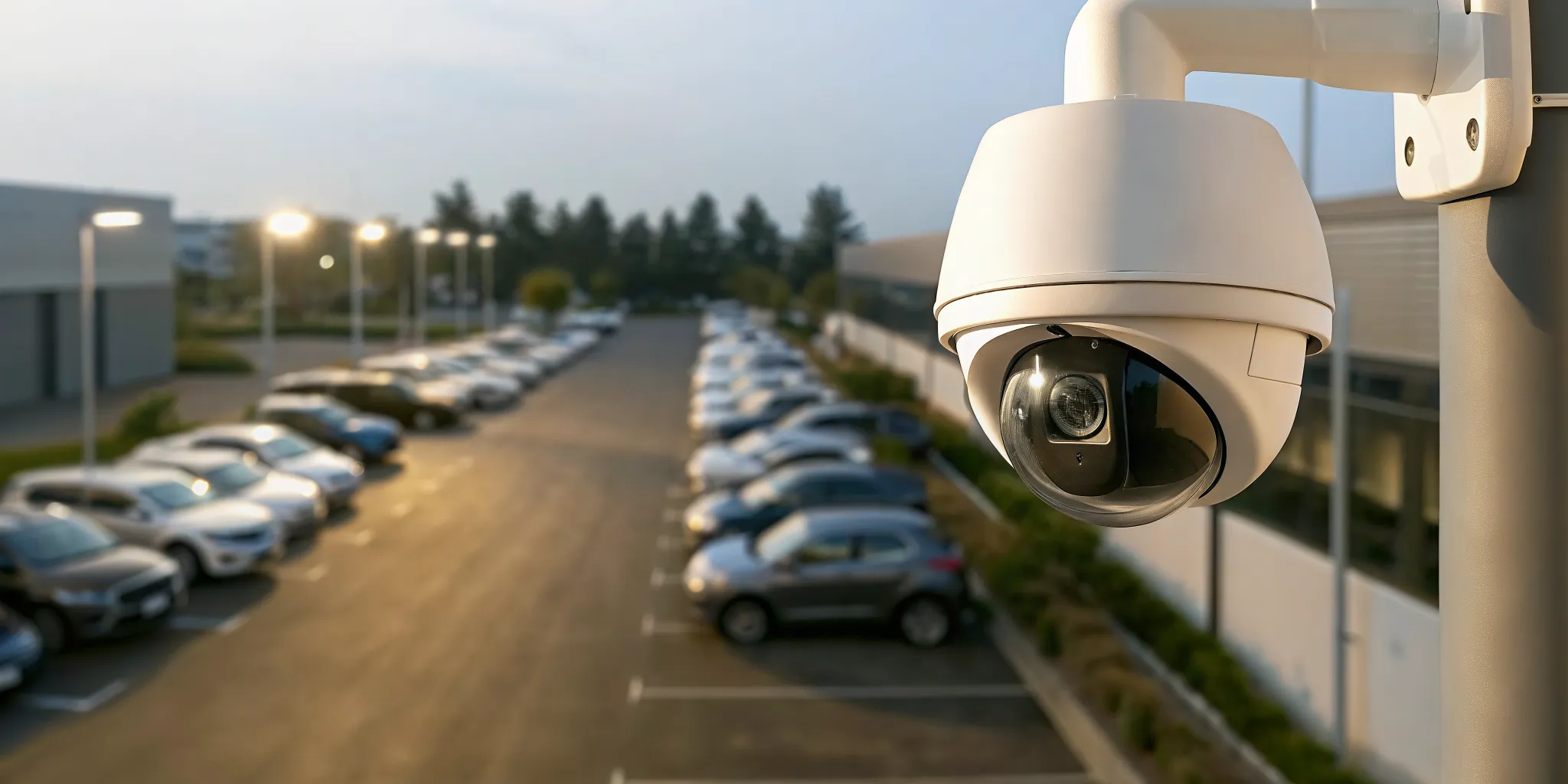
A dealership lot can hold millions of dollars in movable inventory, with exposure changing from a busy sales day to a largely unattended property after closing. Effective protection therefore needs more than a few cameras pointed at the showroom. It should help management see activity across the lot, service areas, entrances, and offices, while supporting a fast, informed response.
A car dealership security camera system Chicago businesses rely on should combine high-definition video, wide-area coverage, license plate recognition, and live monitoring. That combination deters theft, documents incidents, and protects vehicles, customers, and staff. When integrated with alarms, access control, and speaker intervention, the system can help verify suspicious activity and address it before a situation escalates.
For Chicago dealerships, the first design question is not simply how many cameras to install. It is how the lot’s layout, inventory flow, lighting, and after-hours risks should shape coverage and response.
Why Does a Chicago Car Dealership Need a Security Camera System on Its Lot?
Vehicle theft is not a distant risk for dealerships. The National Insurance Crime Bureau reported that dealership thefts increased by about 60% in 2023, contributing to more than $1 billion in annual industry losses. Chicago has faced its own serious vehicle-theft pressure. Local reporting and competitor research indicate that thefts reached an all-time high in 2023, while early 2024 activity averaged roughly 65 vehicle thefts per day citywide. Those figures should prompt dealership owners to review how well their lots are protected after business hours.
A dealership lot concentrates valuable, movable inventory in a large outdoor area. Vehicles may be spread across customer parking, display rows, service entrances, and rear sections that are difficult for staff to observe continuously. Without clear coverage, thieves and vandals can exploit dark corners, perimeter gaps, or predictable closing routines. A properly designed security camera system can make the property less attractive to criminals while helping management understand what happened when an incident occurs.
Deterrence, evidence, and inventory protection
Visible, well-positioned cameras create a practical deterrent, particularly when they cover vehicle rows, driveways, gates, and other likely approach routes. High-resolution footage can also document suspicious activity, property damage, unauthorized access, and vehicle movement. That evidence may support an internal investigation, an insurance claim, or a report to law enforcement. Clear timestamps, usable night footage, and reliable recording matter more than simply having cameras mounted on a building.
Security cameras also help protect the dealership during ordinary operations. Management can review lot activity, monitor deliveries, and investigate customer or employee safety concerns without relying solely on memory or occasional patrols. Some insurance providers may offer premium discounts of roughly 10% to 20% for secured properties. Eligibility and savings vary by carrier, policy, and system design. Dealership owners should confirm any available incentive directly with their insurance representative.
Lot protection works best as part of a broader security plan that considers lighting, alarms, access points, and response procedures. For a related look at camera planning for commercial retail properties, review this comprehensive retail security guide.
How Does License Plate Recognition Keep Dealership Inventory Accountable?
A dealership lot changes constantly. Vehicles arrive for delivery, move between display rows, leave for test drives, and return to service or storage areas. License plate recognition (LPR) adds an identifying data point to those movements by reading the plate on a vehicle and recording the event in the security system. Modern dealership camera systems can monitor vehicles entering and leaving the property, giving management a searchable record that complements inventory and key-control procedures.
That record is especially useful during test drives. When a vehicle leaves the lot, the plate read can be paired with the time of departure and the designated exit lane. A later read can document its return. If a vehicle does not come back as expected, staff have a starting point for reviewing the related video, confirming which vehicle moved, and determining when it left. The same information can help identify vehicle swaps, unauthorized exits, or activity that does not match the dealership’s normal operating procedures.
Design the camera around the lane, not the whole lot
LPR is not simply a software feature added to any wide-angle camera. The camera needs a narrow field of view aimed at a defined entry or exit lane, where vehicles pass through a predictable capture zone. The installation should account for the approach angle, vehicle speed, lane width, mounting height, and potential glare from headlights or wet pavement. A camera pointed across a broad parking area may show that a vehicle is present, but it may not capture a plate reliably enough to support an investigation.
Resolution matters after dark
High-resolution imaging is necessary to read plate details accurately, including at night. Exposure, infrared performance, lens selection, and positioning all affect whether a plate is legible when headlights, shadows, or low light create difficult conditions. These details make choosing outdoor surveillance cameras an important part of the design rather than an afterthought.
Each read should include a timestamp, vehicle image, and associated video when available. Together, those records establish a clear event timeline. If inventory disappears, a vehicle leaves without authorization, or a theft-of-service allegation requires review, management can move from assumption to verifiable evidence. LPR does not replace good key, employee, or test-drive controls. It gives a Chicago dealership security camera system another accountable checkpoint at the places where inventory crosses the property boundary.
How Do Live Video Monitoring and Virtual Guarding Protect After Hours?
A dealership lot can be difficult to protect after the showroom closes, especially when inventory is spread across large outdoor areas. Live video monitoring adds an active response layer to the security stack overnight. Remote monitoring staff watch for activity in real time, assess what is happening, and respond before a suspicious event becomes theft, vandalism, or property damage.
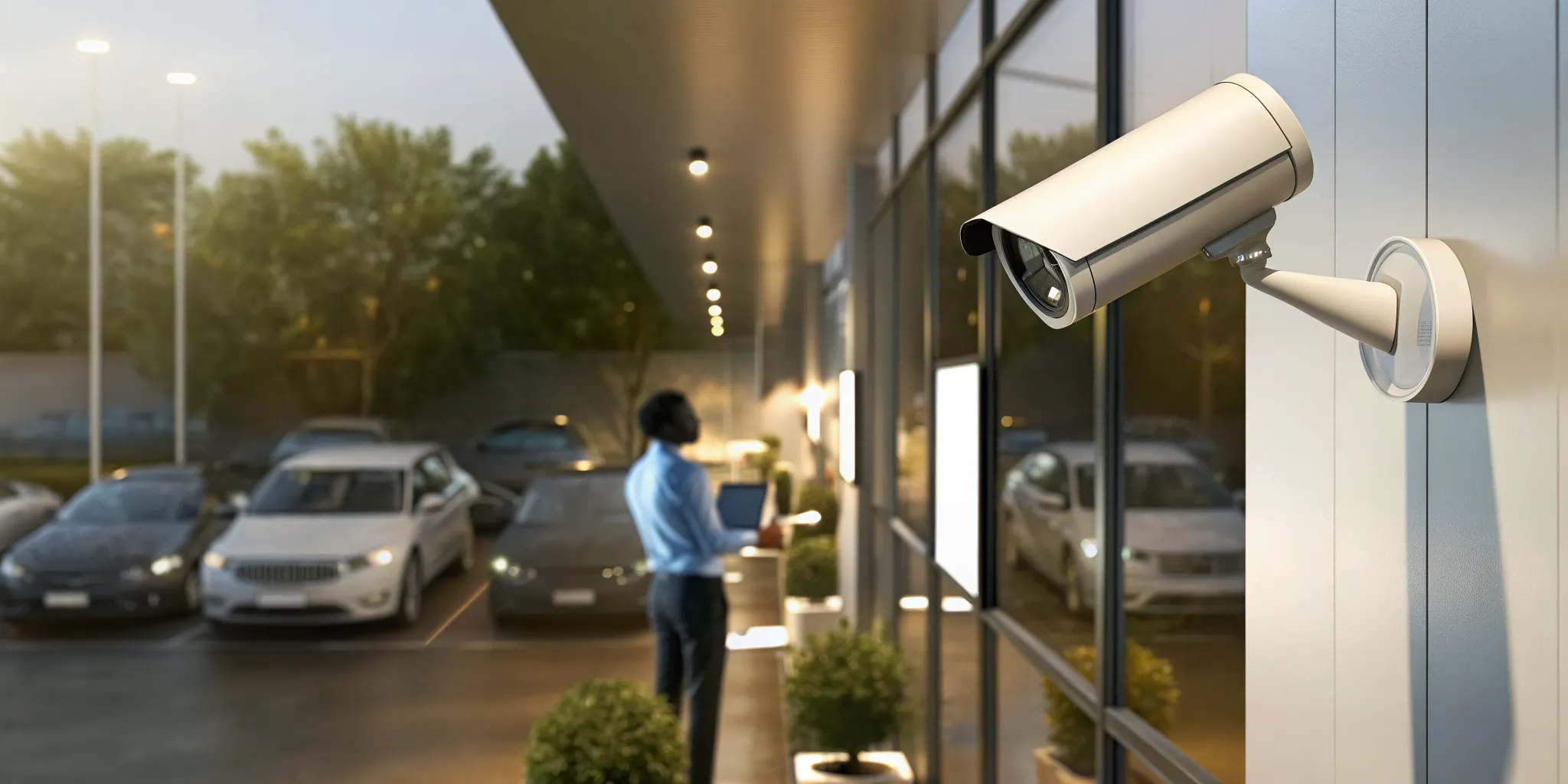
What Virtual Guarding Looks Like in Action
Virtual Guarding combines trained remote operators, high-definition cameras, analytics, and two-way audio. When AI-powered human detection identifies a person in a restricted area. The system can alert the monitoring team while filtering out much of the movement that causes traditional motion sensors to trigger unnecessarily. Operators can then assess the live video and use existing speakers or a connected speaker system to address the person directly.
A clear, immediate voice intervention may tell a trespasser that the lot is monitored and instruct them to leave. This proactive step can interrupt behavior before someone reaches a vehicle or building. Because the service can often leverage a dealership’s existing cameras and speaker infrastructure, it may provide a cost-effective alternative or supplement to an on-site physical guard. Learn more about how virtual guarding works before deciding which level of coverage fits the property.
Virtual Guarding is especially useful for rear lots, perimeter areas, and other locations that are difficult for staff to observe after hours. AI-based vehicle detection can also alert the monitoring team to unauthorized vehicle movement, helping operators focus attention on activity that matters instead of watching every frame manually.
When an alarm event occurs, remote staff can verify the situation through video before dispatching police or other emergency services. That verification reduces false dispatches and gives responding authorities useful context about whether a crime may be in progress. Video-verified alarms can also receive priority police response, making accurate detection and rapid communication valuable parts of a dealership’s after-hours plan.
InVision Systems treats Virtual Guarding as a major differentiator because it connects technology with human judgment. Its virtual guarding services can be designed around the dealership’s cameras, lot layout, operating hours, and risk points, creating a more proactive security strategy without requiring a full replacement of existing equipment.
Where Should Cameras Go in a Car Dealership Security Camera System Chicago?
A dealership camera plan should follow how people, vehicles, and valuables move through the property. Proper placement covers showroom entrances, service bays, office access points, lot perimeters, and the rear lot, where inventory can be more vulnerable when visibility and staff presence are limited. A professional security camera system should reduce blind spots without making the showroom feel overly industrial.
A Checklist for Dealership Camera Placement
- Showroom entrances: Position cameras to capture faces as customers and employees enter, while also viewing the approach to the building. Use discreet, well-finished housings where appearance matters, but do not sacrifice image quality or useful angles. Showroom cameras should balance aesthetic design with high-performance surveillance.
- Service bays: Cover bay doors, vehicle handoff areas, customer reception points, and the approaches between the shop and office. These views can help document vehicle movement and identify unauthorized access.
- Office and cash-handling points: Monitor entrances to administrative offices, finance areas, and other locations where keys, records, deposits, or sensitive customer information may be handled. Aim cameras at access paths and transactions without unnecessarily recording private workspaces.
- Lot perimeter and rear lot: Use overlapping views along fences, gates, drive aisles, and vehicle rows. Include the entire perimeter, not only the customer-facing frontage. Rear-lot access deserves specific attention because inventory may be most vulnerable there.
- Wide-area lot coverage: Select outdoor cameras with wide-area lenses for broad vehicle-row and perimeter views. Dealership lots also require infrared (IR) night vision so surveillance remains useful in low-light conditions after closing. Review the outdoor surveillance camera guide when comparing weather-resistant equipment.
Wide-angle cameras are appropriate for general lot coverage, but they are not the right choice for every task. Entry and exit lanes used for license plate recognition typically need a narrow-angle camera aimed at the lane with enough resolution and the correct angle to capture plates accurately. Separating these purposes produces more reliable evidence than asking one camera to cover an entire driveway and read plates at the same time.
Before installation, walk the property after dark and during the busiest service periods. Check glare from showroom glass, headlights, lighting changes, obstructions from parked vehicles, and areas where landscaping or signage may create shadows. The final layout should combine performance, maintainability, and a clean customer-facing appearance.
Request a free lot walkthrough and camera design recommendation for your dealership today.
Why Does a Dealership Security System Need to Work Together as One Layer?
A dealership needs more than a collection of camera views. Cameras document activity, but they do not necessarily control who enters a service area, identify an alarm as a real threat, or help a manager review an incident across several properties. A coordinated system connects detection, verification, access control, recording, and response so each layer strengthens the next.
Why Integration Outperforms Standalone Cameras
| Approach | What it provides | Where it falls short |
|---|---|---|
| Cameras only | Visual evidence and the ability to review recorded activity. | Cannot independently restrict access or verify an alarm in real time. |
| Cameras + alarm monitoring | Video coverage paired with alarm notification and monitored response. | Access permissions and incident workflows may remain separate. |
| Fully integrated | Cameras, access control, alarms, and remote monitoring working from one security strategy. | Requires professional design, installation, network planning, and ongoing support. |
For example, integrated access control systems can restrict and record entry to service bays and administrative offices. When a credential is used, management can associate the access event with nearby video. That creates a more useful audit trail than either a badge report or a camera clip alone.
Video-verified alarms add another important layer. Monitoring personnel can review an alarm event through the camera system before emergency services are dispatched, helping distinguish an active intrusion from an animal, weather event, or equipment issue. With remote monitoring, a trained operator may also use speaker intervention to address an unauthorized person in real time. High-definition cameras with human detection can help reduce false alarms compared with basic motion sensors.
The infrastructure behind the system matters just as much as the devices. A dense camera network generates substantial video traffic, so structured cabling should be designed to support high-bandwidth transmission and dependable recording. In a multi-location operation, cloud-based surveillance and video management software can give authorized managers one interface for viewing sites and searching for specific incidents quickly. The right security camera systems should be planned as part of that complete architecture, not installed as isolated equipment.
InVision Systems designs, installs, and supports integrated security stacks for Chicago-area dealerships, with experience serving clients including Martin Nissan, Webb Chevy, and Napleton’s Northwestern. That end-to-end approach helps dealers protect inventory, staff, customers, and facilities with technology that works together.
Frequently Asked Questions
What features matter most in a dealership camera system?
Prioritize high-resolution video, dependable low-light performance, wide coverage of the lot perimeter, and clear views of entrances, service bays, offices, and rear access points. AI-based human or vehicle detection can help distinguish meaningful activity from routine motion. A searchable video management platform, secure storage, and integration with alarms or access control make incidents easier to verify and investigate.
Can license plate cameras read plates at night?
Yes, when the system is designed for the entry and exit lanes. License plate recognition works best with high-resolution cameras, suitable illumination, and a narrow viewing angle focused on the vehicle path. A general-purpose camera pointed across a large lot may not produce reliable plate details, so placement and calibration should be part of the design.
How does live video monitoring protect a dealership after hours?
Live monitoring can combine AI detection with trained human verification. When an unauthorized person or vehicle is detected, a remote specialist can assess the event and use connected speakers for real-time voice intervention. The team can also verify an alarm before emergency dispatch, helping reduce false alarm responses while creating an active deterrent.
How long should a dealership keep surveillance footage?
There is no single retention period that fits every dealership. The right period depends on camera coverage, storage capacity, incident-response needs, insurance requirements, and applicable policies or regulations. Ask your integrator to document retention settings, protect recordings from unauthorized access, and confirm that footage can be quickly searched and exported when an incident occurs.
Design Your Chicago Dealership Security System With a Team That Knows the Lot
Every dealership lot has its own layout, inventory flow, and after-hours risks. A system built for one property does not automatically fit another. InVision Systems designs, installs, and supports integrated camera, access control, and alarm systems, plus remote monitoring for Chicago-area auto dealers, with experience serving clients including Martin Nissan, Webb Chevy, and Napleton’s Northwestern.
Schedule a free dealership security assessment to map your lot, review coverage gaps, and get a recommendation that fits your budget. Contact the InVision Systems team today to talk through your options and get a plan for protecting your inventory around the clock.