
Retail Store Security Camera System Chicago: A Complete Guide
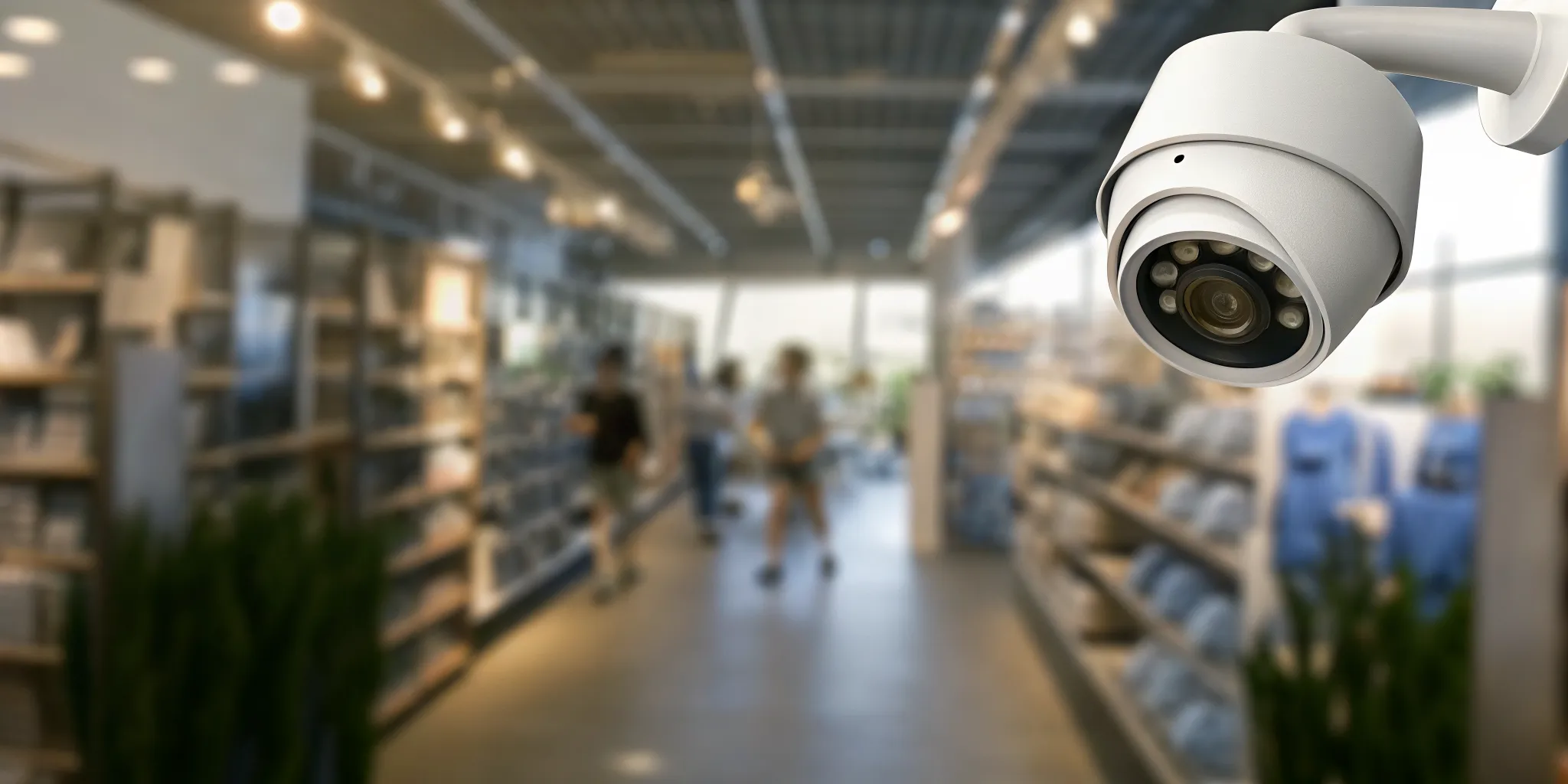
Retail security is not limited to recording what happened after a loss. Camera placement, visibility, and a clear response plan can help deter theft, protect employees, and give managers better awareness across the sales floor, entrances, stockrooms, and checkout areas. For Chicago retailers, local conditions and each store’s layout matter just as much as the equipment itself.
A retail store security camera system Chicago retailers can depend on is designed around the location’s lighting, ceiling height, traffic patterns, and vulnerability points. When integrated with analytics, access control, or live intervention, it can support both loss prevention and employee safety instead of functioning as passive video storage.
That broader approach is especially important in convenience and high-traffic retail environments, where the CDC reports substantially elevated risks of workplace violence for some retail workers. Understanding the risks specific to Chicago stores is the first step toward building coverage that supports safer, more accountable operations.
Why Retail Stores in Chicago Need a Dedicated Security Camera System
Retail security is no longer limited to protecting merchandise after a break-in. National estimates put organized retail crime losses at approximately $68 billion. And Chicago-area stores face the daily challenge of shoplifting, internal loss, disputes, and incidents that can affect customers and staff. A dedicated camera system gives store owners usable visibility across sales floors, entrances, registers, stockrooms, and loading areas, helping teams identify risks before they become expensive problems.
Protecting employees as well as inventory
Retail security also has a workplace safety dimension. The CDC reports that convenience-store workers experience a work-related homicide rate about seven times higher than workers in other industries: 2 homicides per 100,000 workers compared with 0.28 per 100,000. Convenience stores are only one part of the retail sector, but the disparity illustrates why retail owners should plan for threats involving robbery. Confrontation, and after-hours access, rather than treating cameras as evidence-gathering equipment alone.
Camera placement, clear views of customer interactions, and coverage of vulnerable areas can support faster decisions during an incident. When paired with appropriate procedures and other safeguards, surveillance can help deter theft and give managers a more reliable account of what happened.
A measurable return on loss prevention
Properly placed cameras can reduce retail theft by up to 50%, according to commonly cited industry benchmarks. The result depends on the design, coverage, lighting, response process, and how consistently the system is used. A camera pointed at the wrong angle or washed out by glare will not deliver the same value as a system designed around the store’s actual risks.
InVision Systems has seen the operational value firsthand. For The Fudge Pot, camera and security improvements helped increase cash-till accuracy from 70% to 95%. That kind of improvement matters because loss prevention is not only about catching a shoplifter. It can also mean clearer transaction review, stronger accountability, and fewer unexplained discrepancies.
Why local experience matters
Every retail location has different sightlines, traffic patterns, building constraints, and exposure points. InVision Systems has served Chicago businesses for more than 23 years and retains 95% of its clients, a strong signal that its approach extends beyond installation. A tailored proposal should account for the store’s layout and operating routines, then connect camera coverage to the broader security plan.
Explore business security systems with cameras to see how a dedicated approach can support a Chicago retail location.
Key Features to Look for in a Retail Store Security Camera System
The right system should make it easier to see what is happening, identify meaningful activity, and respond before a small incident becomes a costly one. Resolution matters, but so do coverage, lighting performance, installation requirements, and analytics that turn video into useful information. A professional design can combine camera types when a Chicago retail location has an existing coax network or challenging areas such as entrances, aisles, stockrooms, and parking lots.
| Technology | Strengths | Best fit | Considerations |
|---|---|---|---|
| IP cameras | High-resolution network video, including 4K at 60 frames per second, Wide Dynamic Range for difficult lighting, and advanced analytics. Fisheye models can provide 360-degree coverage. | New installations, larger stores, and locations needing detailed views or flexible expansion. | Requires network planning, adequate bandwidth, and properly configured power and storage. |
| HD-TVI | Can deliver 1080p video while using existing coaxial cable. | Retailers seeking a cost-effective upgrade from older analog equipment without replacing every cable. | May offer less flexibility than a modern IP architecture for advanced integrations and future expansion. |
| Analog | The lowest initial equipment cost and a familiar installation approach. | Basic coverage where budget is the primary concern and existing equipment remains serviceable. | Lower image detail and limited analytics make it a declining choice for new systems. |
Analytics that support loss prevention
Analytics should serve a clear operating goal. Intrusion detection can flag activity in restricted areas after hours. Line-crossing rules can alert staff when someone enters a receiving zone or crosses a defined boundary. Object classification helps distinguish people and vehicles from less relevant movement, while occupancy tracking and people counting can reveal traffic patterns and crowding. Face detection may support investigations where appropriate, but its use should follow applicable privacy requirements and store policy.
Product examples illustrate the range of available capabilities. Pelco describes retail cameras with 4K video at 60 fps, Wide Dynamic Range, and 360-degree views for difficult lighting and broad coverage. Lorex highlights AI-powered analytics such as object classification and occupancy tracking for retail operations. These examples are useful benchmarks, not substitutes for a site-specific design. For a customized security camera system, the final selection should match your store layout, lighting, network, retention needs, and response plan.
How Virtual Guarding Complements Your Retail Security
Cameras are most valuable when they help your team act before a suspicious situation becomes a loss. Virtual Guarding adds that proactive layer by connecting your existing camera system to remote monitoring operators who can assess activity and respond in real time.
Use the cameras you already have
Virtual Guarding can often work with an existing camera network, so a retail store may not need to replace every device to improve oversight. AI human detection helps identify activity that deserves attention, such as a person entering a restricted area or moving around a location during unusual hours. Instead of forcing managers to watch screens continuously, the system helps direct attention to meaningful events.
Intervene before an incident escalates
When an alert is verified, a remote monitoring operator can use live audio to address the situation. A clear voice warning can tell an unauthorized person that the property is being monitored and that they must leave. This immediate intervention may deter trespassing, theft, or vandalism before the store faces a larger loss. It also gives employees a defined response process instead of requiring them to confront a potentially unsafe situation themselves.
The value is continuous coverage without the expense of assigning a physical guard to every location. For stores that need 24/7 awareness but must manage operating costs, Virtual Guarding can provide a practical alternative or supplement to on-site security personnel. A Lorex-published retail case study reports $12,000 in avoided theft losses after a rental equipment store implemented a monitored camera solution (case study). Results vary by location, system design, and response procedures, but the principle is consistent: faster detection creates more opportunities to prevent loss.
InVision Systems combines camera design, AI-based detection, and live intervention into a security strategy built around your store’s layout and vulnerabilities. Learn more about Virtual Guarding or review InVision’s Virtual Guarding services for a retail-focused approach.
Custom Security Design for Chicago Retail Layouts
Every retail location creates a different security challenge. A neighborhood shop with low ceilings and bright displays needs a different camera plan than a large Chicago store with tall shelving. Mixed lighting, multiple entrances, and a stockroom that is hidden from the sales floor. InVision Systems designs each system around the physical layout, daily operations, and specific vulnerability points rather than applying the same equipment package everywhere.
Design around visibility, lighting, and blind spots
The design process accounts for ceiling height, glare, shadows, changing daylight, merchandise placement, and the routes customers and employees use through the store. Cameras can be positioned to protect entrances, checkout lanes, high-value displays, loading areas, and restricted spaces without leaving gaps behind shelving or partitions. The goal is useful coverage that supports prevention and clear review, not simply a large number of cameras.
That same approach can incorporate existing infrastructure where appropriate. During an on-site assessment, an integrator can determine whether the store is better served by new IP cameras, upgraded wiring, or a combination of technologies. The result is a system built for the location’s real conditions and future needs.
Connect cameras to transactions and building security
POS integration adds another layer of loss prevention by connecting video to transaction-level activity. When a manager needs to review a refund, void, cash drawer event, or disputed purchase. Synchronized footage can help show what happened at the register and reduce time spent searching through video. Analytics such as object detection or line-crossing alerts can also bring attention to activity that deserves a closer look.
Retail cameras should not operate in isolation. Connecting them with access control systems can limit entry to stockrooms, offices, and other sensitive areas while creating a clearer record of access. Adding commercial burglar alarm monitoring extends protection beyond business hours, helping coordinate video verification and alarm response when the store is closed.
Plan the investment with financing options
Budget should not force a retailer to accept uncovered blind spots. InVision can review financing options as part of the proposal, including programs designed to help businesses finance equipment. Many businesses finance security equipment, and some options may support approval in as little as one day. The right structure depends on the project scope and qualification, so the consultation should clarify total cost, ongoing service, expansion plans, and what is included before work begins.
Choosing the Right Security Partner in Chicago
A reliable security partner should do more than recommend a list of cameras. Look for a local integrator that understands Chicago-area properties, can assess how your store actually operates, and remains available after installation. The right partner helps you reduce risk over time, not simply complete a hardware sale.
Prioritize local experience and personal involvement
Chicago retail properties can have very different layouts, lighting conditions, customer traffic patterns, and vulnerability points. A partner with more than 23 years of Chicago experience can bring practical local knowledge to the design process and anticipate challenges that a remote. Cookie-cutter approach may miss. InVision Systems was founded in 2002 and serves commercial, industrial, and residential clients across the Greater Midwest.
That experience includes work for organizations such as The Drake Hotel, Forest Preserve Police, Martin Nissan, and Webb Chevy. Owner Raz Meliach remains personally involved in projects, giving clients a direct connection to the person responsible for the company’s security standards and approach.
Expect a proposal built around your store
A strong proposal should explain why each camera location, coverage angle, recording feature, and integration is recommended. It should account for entrances, checkout areas, high-value merchandise, stockrooms, parking areas, and employee safety concerns. Ask how the system will support theft deterrence, incident review, and future expansion rather than accepting a standardized package.
It may also make sense to coordinate cameras with access control, alarms, or professional monitoring. A broader review of business security systems with cameras can help you compare the elements of a complete plan.
Confirm support, training, and accountability
Installation is only the beginning. Your team should receive clear training on searching footage, exporting evidence, responding to alerts, and reporting incidents. Ongoing support matters when a camera needs adjustment, a manager changes, or the store adds a new entrance or sales area.
InVision Systems reports a 95% client retention rate, a useful indicator that customers continue to value the relationship after the initial project. If you are evaluating a retail store security camera system Chicago businesses can rely on, start with a free on-site consultation. An in-person assessment can identify practical improvements and clarify which combination of technology, service, and support fits your location.
Frequently Asked Questions
How should cameras be placed in a retail store?
Start with the store’s highest-risk and highest-traffic areas, including entrances, exits, checkout lanes, fitting rooms, stockrooms, and delivery points. The design should account for lighting, ceiling height, blind spots, and the specific vulnerability points in each location. A professional assessment helps balance useful coverage with customer privacy and clear views of faces, products, and transactions.
Can a retail camera system work with existing equipment?
Often, yes. An assessment can determine whether existing cameras, cabling, recording equipment, and network infrastructure can be reused or upgraded. HD-TVI technology may support a cost-effective modernization when a store already has coaxial cable. While newer IP cameras can provide higher resolution and analytics where the network supports them. Reuse should never compromise coverage, storage, or reliability.
Can security cameras connect with a retail POS system?
Yes. POS integration can connect video with transaction-level information, helping managers review what happened during a disputed sale, refund, void, or cash-handling event. This gives loss-prevention teams more context than video alone and can help identify patterns that require training, process changes, or additional security measures.
What is virtual guarding, and can it help a retail store?
Virtual guarding combines existing or new cameras with AI human detection and live audio intervention. When an authorized monitoring team identifies activity that needs attention, a trained operator can use a speaker system to address people on site in real time. This proactive approach can supplement camera recording and provide a cost-effective alternative or complement to physical guards. See how Virtual Guarding works.
Schedule a Free On-Site Security Consultation
A site-specific review can help identify coverage gaps, visibility concerns, and practical ways to support safer retail operations. Schedule your free on-site security consultation today with InVision Systems, and discuss a retail security camera approach built around your store’s layout and needs.