
Thermal Camera Security Applications Guide
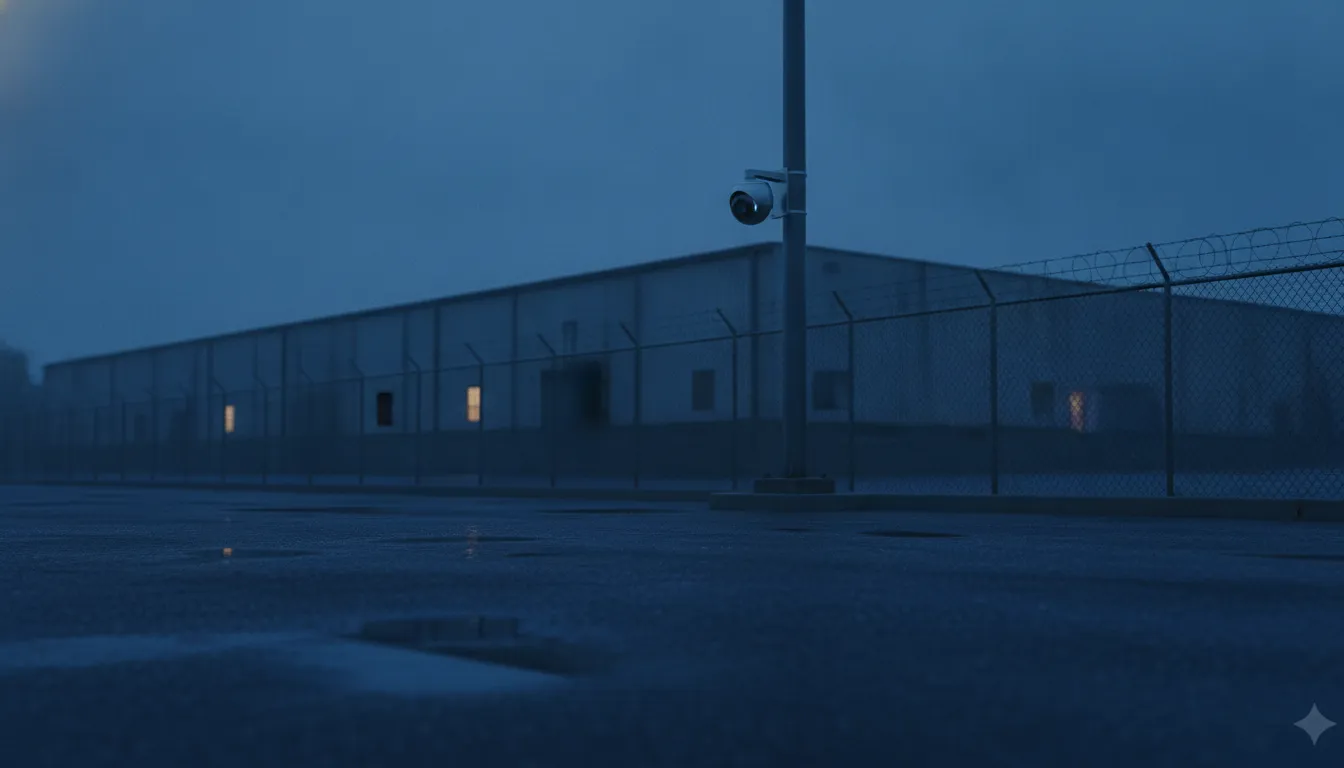
Thermal camera security applications are the jobs a heat-sensing camera can do that a normal camera cannot. It can spot a person or vehicle in total darkness, glare, fog, or light smoke. It can also flag a hot spot before it becomes a fire. They do not replace a visible camera. They answer a different question, which is whether something warm is there, not what it looks like.
A buyer in Chicago, the suburbs, Northwest Indiana, or Southeast Wisconsin usually meets this choice outdoors. Think of a fence line, a dark yard, a loading area, or a plant perimeter. Visible cameras already cover doors, faces, and plates. Thermal earns its place only where those cameras go blind or alarm too often. This guide walks through the fit, the limits, and the design choices before you spend on a detector you may not need.
Request your free security assessment now
InVision Systems designs, installs, and supports custom security systems for industrial, commercial, and residential properties across that region. A site visit decides whether thermal belongs in the plan. The rest of this page is the buying logic we use before that visit.
What a thermal camera actually sees
A thermal camera does not use a lamp, and it does not wait for light to bounce off a jacket. It reads infrared energy that people, engines, and warm equipment already give off, then turns that energy into a picture. The Department of Homeland Security’s thermal imaging note describes that picture as radiation the eye cannot see. It is useful in total darkness and through dense smoke. It can also show temperature differences.
That is the whole application. If the threat is a warm body against a cooler background, thermal can mark it when a color camera shows a black frame. If the job is to read a face, a logo, or a license plate, thermal is the wrong tool. The picture is a heat map, not a photograph.
Heat detection is not infrared night vision
Sales pages mix these up. Infrared night vision, the kind built into most outdoor security cameras, shines or collects near-infrared light and paints a black-and-white photo from the reflection. Turn the illuminator off, or put the subject past its reach, and the image falls apart. Thermal does not need that illuminator. It measures emitted heat, so a dark coat does not hide a person the way it can hide them from a reflected-light camera.
The trade is detail. Teledyne FLIR notes that common thermal detectors are 320 by 256 or 640 by 512 pixels. Each detector element has to be much larger than a visible-camera pixel to catch a longer wavelength. You get a reliable shape of a person or a vehicle. You do not get an ID photo. Pair the two when you need both detection and identification.
DHS also draws a hard line on materials. Thermal imaging cannot look through ordinary glass or through water. A camera aimed through an office window, from inside a guard shack, will see the glass, not the lot. Mount it outside, looking at the scene, or it is wasted.
Where thermal camera security applications earn their cost
Thermal is a specialty layer. Use it where visible cameras fail for a known reason, not as a blanket upgrade. These are the applications that usually justify the detector on a commercial or industrial site.
Dark perimeters and long fence lines
A warehouse yard, a plant fence, or a storage lot can run for hundreds of feet with no useful light. Floodlights help a visible camera and also tell an intruder exactly where to look. Thermal keeps working with the lights off, in glare from a neighboring lot, and in the flat gray of a lake-effect night. The application is detection: a warm shape crossed the line. A visible camera, or a monitored talk-down, still has to confirm who it is.
That is a different job from designing a full perimeter intrusion system. It is also different from laying out cameras across a parking lot. If the lot is already lit and you need plates and faces, start with a parking lot camera plan. Add thermal only on the dark edge.
Glare, fog, and sun in the lens
Chicago winters put low sun straight into south-facing cameras. Headlights do the same at a gate. Fog and blowing snow wash out reflected-light images. Thermal is less bothered by those conditions because it is not waiting for a reflection. It is not magic in a whiteout. Heavy rain still softens the image. It still holds a person-shaped target when the color camera is blinded.
Early heat, not just intruders
The same sensor that finds a person finds a hot motor, a warming electrical panel, or a small fire. Plants and distribution buildings use this as a safety check alongside security. It does not replace a fire alarm or a listed fire system. It gives operators an earlier look at a hot spot in a yard, a dock, or a remote electrical room.
Sites where camouflage and shadows fool video
A person in dark clothing against a dark wall is a hard problem for visible analytics. Thermal does not care about the clothing color. Critical yards, utility edges, and large industrial lots use it as a detection layer. They then hand the event to a visible camera or a person. Virtual guarding can take that handoff. A remote operator sees the alarm, checks the paired visible view, and uses a speaker if the site has one.
Where it is a poor fit
Skip thermal as the only camera on a store floor, a lobby, or a residential front door. You need color, faces, and package detail there. Skip it behind glass. Skip it when the only goal is license plates. And do not expect it to see through walls. If the property is a typical lit commercial building, a commercial camera system still does the daily work.
Thermal, night vision, and visible cameras compared
Pick the camera by the question you need answered at that spot. Most sites need two answers, so they need two cameras aimed together, not one camera asked to do both jobs.
| Question at that spot | Visible camera | Infrared night vision | Thermal camera |
|---|---|---|---|
| Is a warm person or vehicle there in total darkness? | Only if the scene is lit. | Only within the illuminator’s reach. | Yes. That is the core use. |
| Who is it, or what is the plate? | Yes, with enough pixels and light. | A grainy ID at short range. | No. You get a heat shape. |
| Headlight glare, low sun, or fog | Often washed out. | The illuminator fights the glare. | It usually still shows the warm target. |
| Through a window | Yes. | Yes, with reflections. | No. It sees the glass. |
| Hot equipment or a small fire | Only after smoke or flame is obvious. | No temperature reading. | Yes, as an early visual cue. |
| Best role on a business site | Doors, floors, faces, and evidence. | Short outdoor night coverage. | Dark perimeter and long detection. |
Resolution numbers make the same point. A modern visible camera at the door is often 4K. A thermal detector beside it may be 320 or 640 pixels across. Those extra visible pixels matter for identifying a face or a plate. They do not help if the lens is blind. Spend the thermal dollars on detection range and sensitivity, and spend the visible dollars on identification.
Design choices that decide if thermal will work
A spec sheet range is not a design. Manufacturers publish detection, recognition, and identification as three different distances. Those distances move with the lens, the detector, the weather, and the size of the target. A person at the fence is not a truck on a road. Ask for the distance at which the camera can detect a person on your site. Then ask what the image looks like in rain.
Sensitivity before megapixels
FLIR explains thermal sensitivity as NETD, the smallest temperature difference the detector can see, measured in millikelvin. A lower number sees finer differences. It also holds a clearer shape when the scene is wet or the target is close in temperature to the background. FLIR’s own scale treats a detector under 40 mK as strong and under 50 mK as good. Under 60 mK is merely acceptable. That acceptable unit is grainier. It is also more likely to throw nuisance alarms once you add analytics.
That is the buying question most catalogs skip. Two cameras can share a 640 by 512 detector and still behave differently on a wet November night. One at 35 mK will hold detail that one at 70 mK smears. Resolution still matters. Teledyne FLIR’s comparison of 640 by 512 against 1280 by 1024 makes a simple trade. The extra pixels can add detail or widen the view, not both for free. For a long fence, field of view and detection distance come first. For a gate, a narrower lens and a sensitive detector are enough.
Mount it for the physics, not the convenience
Put the thermal camera outdoors, with a clear line to the ground or fence you care about. Do not shoot it through a window. Keep it off routes where the sun sits in the lens at dawn. Do not expect it to identify anyone. Aim a visible camera at the same zone for color and detail. A PoE camera run lets power and video share a stable cable. Wireless is a fallback for a spot you cannot cable, not the default for a perimeter you intend to trust.
Analytics help only after the image is stable. A thermal camera that can separate a person from a warm roof vent will cut false alarms. A noisy detector pointed at a busy road will not. If staff cannot watch the alarms, route them to monitoring instead of hoping a phone notification is enough at 2 a.m.
What to leave to the assessment
InVision Systems does not publish a one-price thermal kit, and a serious integrator should not. Fence length, mounting height, power, network drops, and whether you need detection or identification all change the bill. Industrial sites such as plants and distribution floors often need the thermal layer. A house usually does not, unless a dark rear yard or a long drive has already defeated ordinary cameras. Residential security still starts with doors, glass break, and a visible camera you can recognize a face on.
How to choose before you buy
Use a short test, in this order. If an earlier step fails, stop. Thermal is the wrong spend.
- Name the spot that fails today. A dark fence, a glare-blinded gate, a foggy dock, or a yard where animals and headlights trigger the alarm. If you cannot name the failure, you do not have a thermal application yet.
- Write the question that spot must answer. “Is someone there?” can be thermal. “Who is it?” needs a visible camera. Most real spots need both.
- Check the sightline. If the only mounting point looks through glass, redesign the mount before you price a camera.
- Ask for detector resolution and NETD, not a single range number. Compare detection of a person on your fence, in clear air and in rain.
- Plan the partner camera, the cable, the recorder, and who answers the alarm. A detector with no response path is a recording nobody watches.
Bring that list to a walkthrough. On a plant or a distribution site, start with industrial security design. Place the thermal view around operations. Do not bolt it on after the visible cameras are already aimed. For a warehouse interior, the warehouse camera layout still handles aisles and docks. Thermal belongs on the dark exterior those indoor cameras never see.
Construction yards are similar. Temporary video can watch trailers and gates, which is what a construction monitoring plan is for. Add thermal only if the yard is large, unlit, and losing events to darkness. Do not buy it to duplicate a camera that already shows a clear color picture.
InVision Systems has designed and supported security systems in the Chicago area since 2002, with a client retention rate over 95 percent. The useful next step is a look at the actual fence, light, and power, not a catalog page. Alarm Agency Lic #127.001456.
Schedule your free security assessment today
FAQ: thermal camera security applications
What are thermal camera security applications?
They are the security jobs a heat-sensing camera does well. That includes finding a person or vehicle in darkness, glare, or fog. It also includes a long unlit perimeter and an early look at a hot spot. They are a poor fit for faces, license plates, indoor retail, and any view shot through glass.
How is a thermal camera different from infrared night vision?
Infrared night vision uses reflected near-infrared light, often from a built-in illuminator, and makes a black-and-white photo. Thermal reads heat the object emits, so it does not need that illuminator. Thermal will not show a face clearly, and it cannot see through ordinary glass or water.
How far can a thermal security camera see at night?
There is no single distance. Detection, recognition, and identification are different tasks. Each one depends on the lens, the detector size, sensitivity, weather, and whether the target is a person or a vehicle. Ask an integrator to estimate person-detection distance on your fence, then confirm it on site.
Can a thermal camera replace my regular security cameras?
No. Use thermal to detect a warm target when visible cameras fail. Keep visible cameras for color, faces, plates, and evidence. On most commercial sites the two are aimed at the same zone and recorded together.
Are thermal security cameras worth it for a Chicago business?
They are worth it when a specific spot already fails: a dark yard, a long fence, headlight glare, or nuisance alarms from weather and shadows. They are not worth it as a general upgrade for a lit lobby or a front door. A site assessment is the honest way to tell which one you have.