
CCTV Camera Price: What the Tag Leaves Out
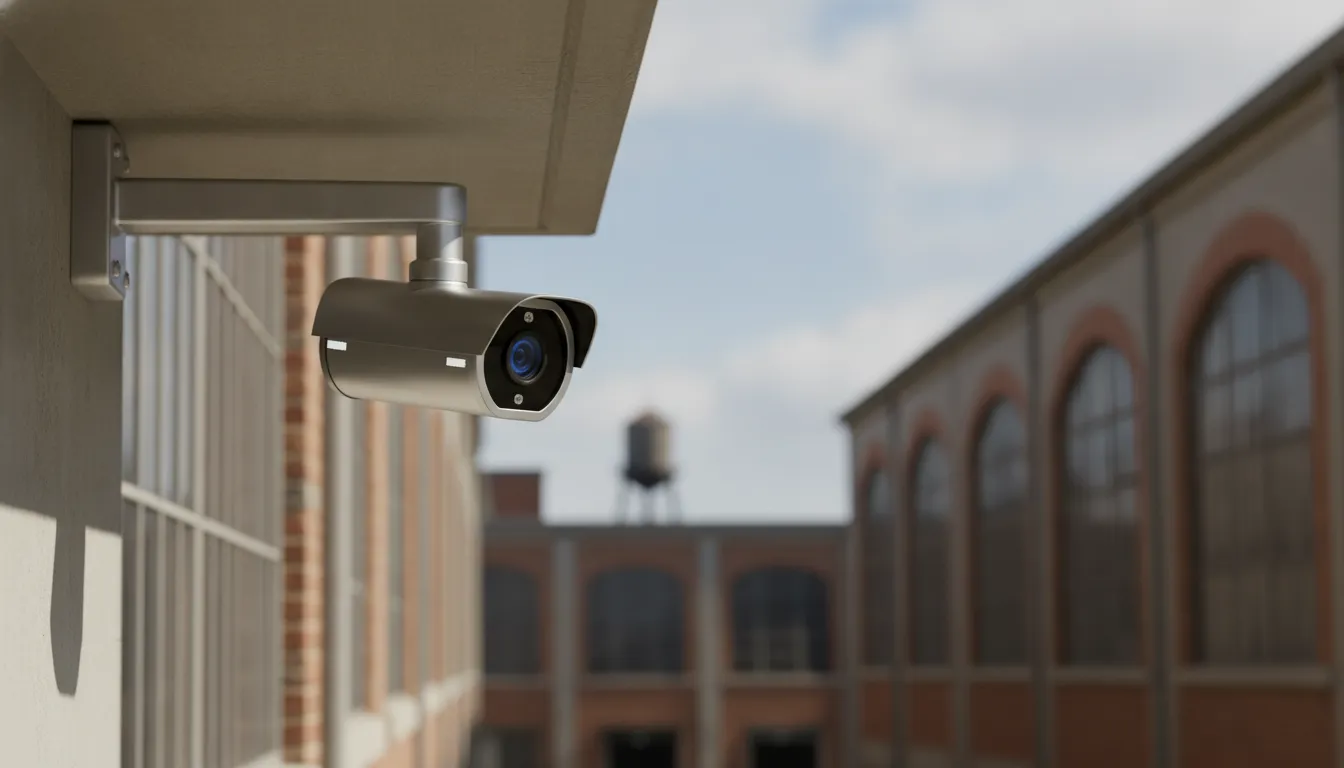
A CCTV camera price answers one narrow question: what does this camera body cost before anyone mounts it, powers it, or records it. Chicago-area buyers often meet that number on a product page, then discover the working system costs more once a recorder, cable, labor, and a useful view are added. This guide shows how to read a camera price, which lines sit outside it, and how to compare two quotes without treating unlike scopes as the same deal.
Call (773) 733-0970 to request your free security assessment
What a CCTV camera price actually covers
Start with the line that names the camera, not the line that names the project. A listed CCTV camera price usually covers the camera housing, the sensor, and a basic mount or junction box. It may include a short cable pigtail. It rarely includes the recorder, the network switch, the long cable run, the lift, or the time to aim the view and name the camera in the software.
That split is why two similar cameras can look close in a catalog and far apart on a proposal. One seller prices the camera alone. Another prices a camera that is already aimed, powered, and visible on a recorder the staff can search. Ask which of those you are looking at before you compare the numbers.
InVision Systems designs camera systems around the site, not around a catalog row. A free on-site look at lighting, ceiling height, and the views you care about is how a security camera system gets a price that matches the building. The camera tag is the start of that conversation, not the finish.
Indoor body versus outdoor housing
An indoor dome and an outdoor bullet are not the same product even when the sensor looks similar. Outdoor housings add weather seals, a sun shield, and often a heater or a stronger mount. Those parts raise the camera price before anyone climbs a ladder. If the camera faces a parking row, a dock, or a west wall, budget for that housing even when an indoor model looks cheaper on the same brand page.
Lens, resolution, and the view you need
Resolution changes the camera price because it changes the sensor and, later, the storage. A wide lobby view and a tight view of a doorway are different jobs. The 1080p and 4K comparison is the right place to match detail to the task. Paying for 4K on a camera that only needs to show that a door opened is a camera-price decision, not a system decision.
Which lines sit outside the camera price
Once the camera line is clear, list the lines that are not the camera. Most surprises live here. A fair quote names each one. A thin quote folds them into one lump or leaves them out until install day.
| Quote line | Usually inside a camera price? | What to ask |
|---|---|---|
| Camera body, lens, and basic mount | Yes | Is the lens fixed, and is an outdoor housing included? |
| Recorder or NVR and hard drives | No | How many days of video does this drive plan assume? |
| Cable, connectors, and pathway labor | No | Is new cable included, or is existing cable assumed good? |
| Power, PoE switch, or a power supply | No | Does each camera have power without a new electrical circuit? |
| Lift, after-hours work, and patching | No | Who supplies the lift, and is ceiling repair included? |
| Aiming, naming, user setup, and training | No | Can staff find a camera and a time on day one? |
| Monitoring or a support plan | No | Is any monthly service optional, and what does it include? |
Read the table as a checklist, not as a price list. InVision does not publish a package price, because a downtown office and a warehouse aisle do not share the same cable path or the same hours of work. Use the rows to see whether two proposals priced the same work.
Recorder and storage
The recorder is its own purchase. Camera count, resolution, and how long you keep video decide the drives. Continuous recording fills drives faster than recording on motion. If one quote includes 14 days and another includes 30, the camera price can match while the recorder price does not. The guide to commercial camera storage options walks through that choice without turning it into a camera sticker.
Cable, power, and the path through the building
Labor follows the path, not the camera. Open ceiling and a short run are cheaper to install than a finished corridor, a fire wall, or a high dock. Power-over-Ethernet cameras still need a cable and a switch port. A wireless camera still needs power at the mount. The notes on PoE cameras for business and on wireless camera systems cover those limits so a lower camera price does not hide a harder install.
If the building already has coax, an HD-over-coax camera can reuse that cable and change the labor line. If the building is on a network recorder, new cameras may need new cable instead. The NVR versus DVR guide helps you see which architecture the quote assumes before you compare totals.
How camera type changes the CCTV camera price
Camera type is the main reason one CCTV camera price is double another before labor starts. Match the type to the view. Do not match it to the lowest tag.
- Fixed indoor dome. Lowest camera price for a lobby, hall, or office. Weak choice for weather or a long outdoor view.
- Outdoor bullet with a sun shield. Higher camera price. Built for a wall, a lot, or a dock where rain and glare matter.
- Turret or eyeball. Mid camera price. Easier to aim than a dome and less prone to night glare from the cover.
- Varifocal or a tighter lens. Raises the camera price when you need a face at a door or a plate at a gate, not a wide room.
- Analytics or a stronger low-light sensor. Raises the camera price again. Buy it only for the cameras that must work in the dark or must tell a person from a shadow.
A mixed system is normal. Put the lower camera price on wide views and the higher camera price on the two or three spots that must show detail. That is a better use of money than making every camera the most expensive model on the sheet.
How to read a camera price on a quote
A useful quote gives each camera its own line. That line should name the model, say whether the housing is indoor or outdoor, and say whether the mount is included. If five cameras are rolled into one dollar amount, you cannot tell which CCTV camera price you are approving.
Each camera line should pass three checks. The view should be named, such as the south dock or the front desk, not only “camera 3.” The lens should be named as a fixed wide view or a tighter view you can adjust. The exclusions should be named too, such as the lift, the recorder, or a new electrical circuit.
Then separate one-time lines from lines that repeat. The camera, the recorder, and the first install are one-time. A support visit, extra cloud storage, or live monitoring can repeat every month. Mixing those into the camera price makes a cheap camera look expensive, or a financed system look cheaper than the cash total.
Ask for the camera lines in writing before you sign. A verbal “about the same cameras” is how two quotes drift apart. When the model names match and the excluded lines match, the totals are finally comparable.
How to compare two quotes without getting misled
Put both proposals next to the same list of views. Mark each camera as included, missing, or unclear. Then mark cable, recorder, lift, and training the same way. Only after the scopes match should you look at the total.
- Write the views you need: front door, staff door, register, dock, lot, and any cash or inventory spot.
- Ask each seller which camera model covers each view, and whether that model price includes the outdoor housing.
- Ask what the recorder holds, in days, at the resolution on the quote.
- Ask whether new cable, a lift, patching, and after-hours work are included or excluded.
- Ask who aims the cameras, names them, and shows your staff how to pull up a clip.
- Set the two totals side by side only after the five answers match.
A lower total that skips the lift or the recorder is not a lower CCTV camera price. It is a smaller job. If the full scope does not fit this quarter, ask for a first phase that covers the doors and the dock, and a second phase that adds the wide interior views. Keep the camera models written down so phase two does not restart the design.
Chicago buildings add their own constraints. A Loop office may limit work to nights. A suburban plant may need a lift over an active aisle. Northwest Indiana and southeast Wisconsin sites in the same service area can share the design and still differ on hours and ceiling access. Those items move labor. They do not change the camera tag, which is why the tag alone cannot rank the quotes.
InVision’s on-site assessment is built for that gap. The team looks at the views, the ceiling, and the cable path, then prices equipment and installation together. You can read how that planning works in the business camera installation checklist. For a wider tour of camera types before you request that visit, the CCTV beginner’s guide is the background piece. It is not a price sheet.
What else belongs in the budget besides cameras
Labor is a real share of an installed system, and it is priced locally. The U.S. Bureau of Labor Statistics groups this work under security and fire alarm systems installers. O*NET, using those wage figures, reports a median hourly wage of $28.75 in Illinois and $29.48 in the Chicago-Naperville-Elgin area.
That is the occupation’s pay, not an InVision rate and not a per-camera fee. It is a reminder that skilled install time has a cost even when the camera tag looks small. See the Illinois wage table for security system installers.
Ongoing cost is separate again. A support plan, cloud backup, or remote video monitoring can be a monthly line after the cameras are in. Virtual guarding uses cameras you already own and adds a live voice response. It is not part of the camera price. If cash flow is the constraint, security system financing can spread equipment and installation. Confirm the term before you treat a monthly payment as the camera price.
Homes follow the same split at a smaller scale. A doorbell camera price is not a whole-home system. If you are pricing a house in the Chicago suburbs, start with the Chicago home security buying guide, then use this page to keep the camera tag separate from cable, the recorder, and monitoring.
What to bring to the first price conversation
You do not need a finished design to get a straight camera price. You do need enough detail that the seller is pricing your building. Bring a short list, a floor sketch if you have one, and the answers to a few practical questions.
- The doors, docks, lots, and rooms you want to see, in priority order.
- Whether any camera must show a face, a package, or only that someone passed by.
- Where you already have cable, and whether that cable is coax or network cable.
- Hours when a lift or a ladder is allowed, and any area that cannot stop work.
- How many days of video you want to keep, even if that number is a guess.
- Who on your team will look up a clip after the installer leaves.
That list keeps the CCTV camera price tied to a view. It also stops a seller from quoting a camera that cannot see the dock, or from assuming your old cable is ready to reuse. InVision uses the same list in a free assessment, then returns equipment and installation as separate, readable lines.
If you already have two quotes, bring both. A designer can mark which camera price includes an outdoor housing, which total skips the recorder, and which labor line assumes daytime work. You leave with a clearer scope, not a single mystery number.
Call (773) 733-0970 to schedule your free security assessment
Frequently asked questions
Is a CCTV camera price the same as an installed system price?
No. The camera price is the device. The installed price adds the recorder, cable, power, labor, aiming, and training. Ask for those lines before you compare two numbers.
Why do two cameras with the same resolution have different prices?
Housing, lens, low-light performance, and analytics change the build. An indoor dome and an outdoor camera with a tighter lens can share a resolution and still carry different prices.
Do wireless cameras remove the installation cost?
No. Wireless cameras still need power at the mount, a solid signal, and time to aim and name them. They can reduce new data cable. They do not remove labor.
Can I reuse cameras I already own?
Sometimes. They have to fit the recorder, the cable, and the view you need. Ask the proposal to say which cameras stay, which are replaced, and what you give up by keeping the older ones.
Where should a Chicago buyer start?
List the doors, docks, and rooms that matter, then ask for an on-site assessment. InVision serves Chicago, the suburbs, northwest Indiana, and southeast Wisconsin, and prices the system from that visit rather than from a camera tag.